Marketing Automation Software Comparison: Your No-Fluff Guide

Welcome to the wild world of marketing automation, where every platform swears it's the magic wand that will solve all your problems. But let's be real. Picking one often feels less like a smart business move and more like trying to solve a Rubik's Cube in the dark.
This guide is your flashlight. We're going to slice through the jargon and compare the top players on what actually matters to your business.
The Highlights: Your TL;DR Guide
Don't have time for the nitty-gritty? Here's the cheat sheet.
- Market's Exploding: The marketing automation market is set to hit a whopping USD 20.12 billion by 2034, so yeah, it's a big deal.
- Best All-in-One for Growth: HubSpot is the king if you want a seamless, all-in-one CRM and marketing hub that's easy to use, though it comes with a premium price tag.
- Best for Smart Automation on a Budget: ActiveCampaign is the champ for small-to-mid-sized businesses that need powerful, AI-driven automation without breaking the bank.
- Best for E-commerce: Omnisend is a no-brainer for online stores, with deep e-commerce integrations and a super generous free plan.
- Best for Simple Email Campaigns: Mailchimp is your go-to if you just want to create and automate beautiful email campaigns without a steep learning curve.
Now, let's get into the details.
Navigating the Marketing Automation Maze
We're going to slice right through the marketing jargon to compare the top players based on what actually matters to your business. The global marketing automation market is exploding, on track to hit USD 20.12 billion by 2034, according to a report by Fortune Business Insights. So, if you're feeling the pressure to choose the right tool, you're not alone. You can discover more insights about this market growth on fortunebusinessinsights.com.
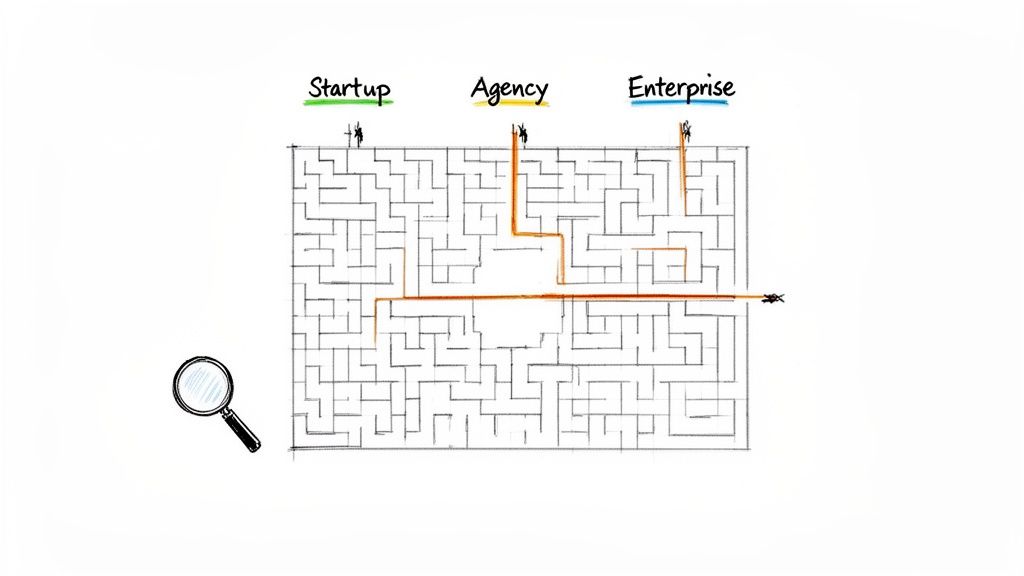
Whether you’re a scrappy startup, a busy agency juggling a dozen clients, or a big-shot enterprise with needs more complex than a Christopher Nolan movie, our goal is simple. We're here to give you a clear, honest breakdown.
We want to help you find a platform that actually makes your marketing hum, not one that just adds another frustrating password to your list.
A Quick Guide to the Best Marketing Automation Tools
Don't have time for a deep dive into every single tool? No problem. Think of this section as the "too long; didn't read" summary of our entire marketing automation comparison, designed to give you the key takeaways in just a few minutes.
You'll quickly see which platform is the best all-in-one, which is the budget-friendly champ for small businesses, and which is the absolute powerhouse for complex automation needs. This is your cheat sheet to zero in on the one or two platforms that actually fit your goals before you get into the weeds. While you're at it, check out our guide on the best marketing dashboard software to keep an eye on all your new automated campaigns.
Marketing Automation at a Glance: The Showdown
Here’s a quick-and-dirty breakdown of the top platforms. We've cut through the noise to highlight what really matters: who each tool is for, what it costs to get started, and its single most impressive feature.
| Platform | Best For | Starting Price | Standout Feature |
|---|---|---|---|
| HubSpot | Businesses needing an all-in-one CRM & marketing hub. | From $890/month (Marketing Hub Professional) | A premium, fully integrated ecosystem with a powerful, user-friendly CRM at its core. |
| ActiveCampaign | SMBs focused on AI-powered email automation & segmentation. | From $15/month (for 500 contacts) | A massive library of multilingual automation "recipes" with integrated AI to make you look like a genius. |
| Omnisend | E-commerce businesses wanting to drive sales. | From $16/month (Standard Plan) | Deep e-commerce integrations (think abandoned cart flows) and an incredibly generous free plan. |
| Mailchimp | Beginners and small businesses needing simple email automation. | From $13/month (Essentials Plan) | The easiest-to-use platform for automating sophisticated email campaigns without pulling your hair out. |
This table should give you a solid starting point. Each of these tools has its own unique strengths, and the "best" one truly depends on your specific business—your team size, your budget, and what you're ultimately trying to achieve. Now, let's dive into the full comparison.
Ready to streamline your reporting?
MetricsWatch pulls twelve sources into one white-label report, delivered on your schedule: Google Analytics, Google Ads, Google Search Console, Google Business Profile, Google Sheets, Microsoft Advertising, Facebook Ads, Facebook Pages, Instagram, LinkedIn Ads, LinkedIn Pages, and Mailchimp. Starts at $49/month. 14-day free trial, no credit card required.
Diving Deep: A Head-to-Head Marketing Automation Comparison
Alright, let's put these platforms under the microscope. This isn't just about ticking off feature boxes from a sales page; it's about seeing how they actually perform in the wild. We’ll look at how a platform like HubSpot, with its famously easy-to-use CRM, stacks up against something like ActiveCampaign, which offers incredibly detailed automation that small and mid-sized businesses love.
Think of it like this—every tool is built with a specific user in mind. This handy visual breaks down what the top tools are really focusing on.
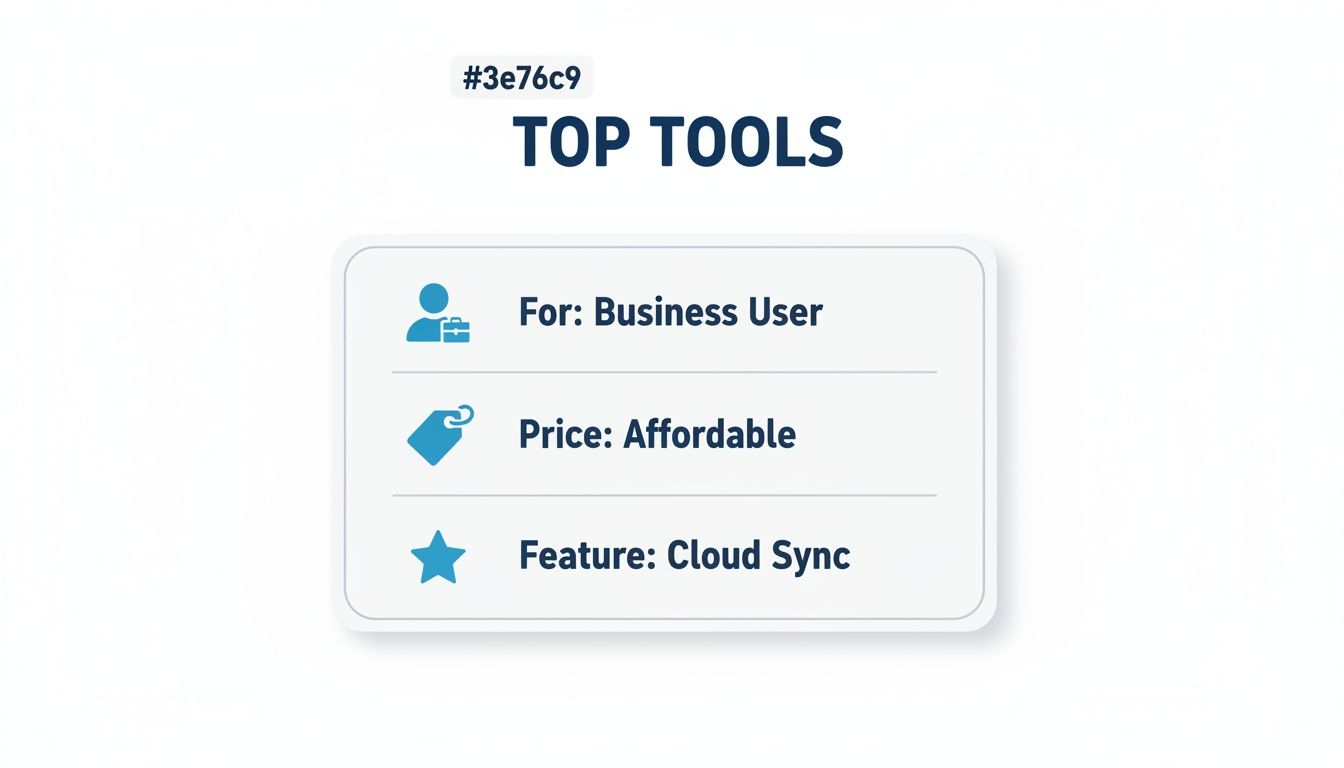
You can see how some prioritize a smooth user experience, others go for the most aggressive price point, and some pack in niche features to win over a specific audience. It's a crowded field, but HubSpot still holds the crown, commanding nearly 35% of the global market, according to data from Statista.
Of course, marketing automation is a massive category. If your main goal is to get your content creation engine running on autopilot, you'll find some great, specialized options among the top content automation tools.
And don't forget reporting—it's often a key differentiator. How you see and share your data can make or break a campaign. We actually have a full breakdown of that in our comparison of popular reporting tools if you want to geek out on dashboards.
Matching Automation Tools to Your Business Needs
Picking a marketing automation tool isn't about finding the "best" software out there. It's about finding the best fit for your business. A platform's true worth is measured by how well it solves your specific headaches, not by a flashy feature list. After all, a tool that’s a dream for a B2B SaaS company might just be a clunky, expensive nightmare for an e-commerce store.
Think of it this way: a digital agency is looking for multi-account management and white-labeling options. Meanwhile, an online store is hunting for deep e-commerce integrations to finally crush their abandoned cart rates. This is where a real marketing automation software comparison shifts from just listing features to focusing on outcomes.
For small businesses, the challenge is finding a platform that’s powerful but doesn't require a programming degree to use. When you're trying to figure out which tool actually lines up with what you need, a detailed look at the 12 Best Marketing Automation Tools for Small Business can be a massive help in avoiding a steep, frustrating learning curve.
Evaluating Critical Factors Beyond Features
Picking marketing automation software just by comparing feature lists is a classic rookie mistake. It's like buying a car because you love the paint job. Sure, it looks great on paper, but what happens when you actually get behind the wheel? The real value isn't just in the bells and whistles—it’s in the entire ecosystem that supports you.
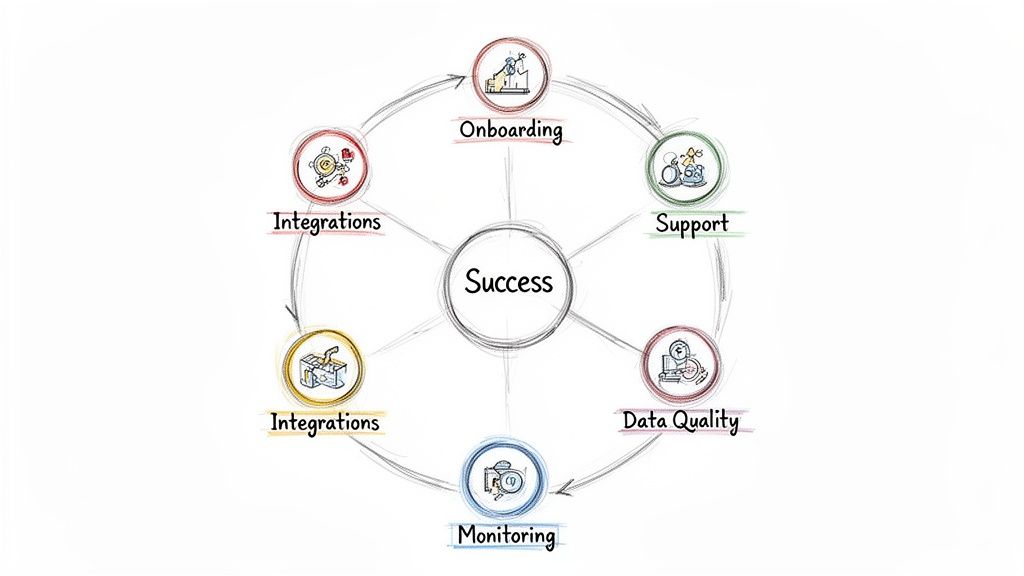
This is where the less glamorous—but absolutely critical—factors come into play. Things like the quality of the onboarding process, how responsive customer support is, and the strength of a platform’s integration marketplace can make or break your experience.
After all, a tool is only as good as the data it runs on. That makes clean data syncs and reliable analytics the true foundation for success. This relationship between your automation tool and your monitoring is what separates a decent marketing machine from a truly great one. To get that part right, you'll need to know how to choose marketing KPIs for reports so your data is always telling you the truth.
Alright, you're in the home stretch. You've sat through the demos, read the feature lists, and narrowed it down to a couple of top contenders. Now comes the hard part: making the final call.
This is where you need to move past the slick sales pitch and dig into how this platform will actually work for your team day-to-day. Don't just take their word for it. After all, research from Nucleus Research shows that marketing automation can boost sales productivity by 14.5% and reduce marketing overhead by 12.2%, so a little extra diligence now pays off big time.
Before you even think about signing a contract, you need to get crystal-clear answers to a few non-negotiable questions.
-
Total Cost of Ownership: "I see the monthly price, but what's the real cost? Walk me through any mandatory implementation fees, training costs, or data migration charges I should expect in the first year."
-
Attribution Modeling: "Don't just tell me you have multi-touch attribution. Show me. Can you demo a realistic customer journey in your platform and explain exactly how it attributes the conversion?"
-
Trial Period Structure: "We need to properly test this. What specific, measurable tasks can my team realistically accomplish during a trial period to validate that your software can handle our most important workflows?"
Still Have Questions? Let's Clear a Few Things Up
Whew. We've just gone through a mountain of information, and I get it—your head might still be spinning a little. It's totally normal to have a few questions rattling around after a deep-dive comparison like this.
So, before we wrap up, I want to tackle some of the most common questions that pop up. My goal is to iron out any last-minute wrinkles and help you feel 100% confident in picking the right platform for your business.


